Learning a new language isn’t just a hobby anymore, it’s one of the best personal upgrades you can give yourself in today’s connected world. It sharpens your mind, boosts your memory and helps you focus better. Beyond career growth and smoother travel, a language lets you experience a culture the way locals do. You can understand their stories, emotions and everyday life in a way that no translation can match. It makes you more confident, flexible and truly aware of the world around you, almost like seeing life in a new colour.
Unlock your potential: Power of German: What?
Now, picture this: You’re walking through Berlin’s buzzing streets, stopping to grab a hot pretzel from a tiny neighborhood bakery or maybe you’re checking out Germany’s super-cool world of tech and business and from the quiet Black Forest to the buzzing art scene, it’s a country you want to explore.
And guess what helps you feel truly at home in all of it?
The German language!
Considering Germany? Don’t just go, immerse yourself!
German is spoken by over 185 million people worldwide, making it one of the most powerful and useful languages you can learn today. You can study in Frankfurt or work in Munich without speaking a word of Deutsch, but learning the language turns your entire experience to a rich and living adventure. What makes German even more exciting is that it goes way beyond Germany. It’s the main language in Austria and Liechtenstein and one of the official languages in Switzerland and Luxembourg. You’ll even hear it in places like South Tyrol in Italy and communities as far away as Namibia.
Germany offers a rare mix of world-class education, strong career opportunities and vibrant, student-friendly cities. But the real magic happens when you speak the language. From chatting with classmates to ordering your morning Kaffee, every interaction becomes easier, warmer, and more meaningful. Learning German isn’t only useful, it’s powerful! Beyond careers, the language opens doors to culture: literature, films, music and traditions feel more personal when you understand them in their original form. At the same time, it helps you build real connections with native speakers, giving you confidence and a stronger sense of belonging.
Public VS Private Universities
1. Funding & Cost
Public University:
● Primary Funding: Receives significant subsidies from the state or national government (taxpayer-funded).
● Tuition: Generally very low, especially for EU students; some states charge nominal semester fees.
● Out-of-State/International Students: Non-EU students may pay slightly higher tuition, but still far lower than private universities.
● Financial Aid: Lower initial cost is the main benefit; fewer institutional scholarships compared to private universities.
Private University:
● Primary Funding: Relies heavily on tuition fees, private donations, and endowments.
● Tuition: Generally high for all students, often ranging from €10,000–€20,000 per year.
● Net Cost: Can be reduced through generous institutional grants or scholarships from endowments.
● Endowment: Large endowments allow flexibility in spending, scholarships, and specialized programs.
2. Size & Class Environment
Public University:
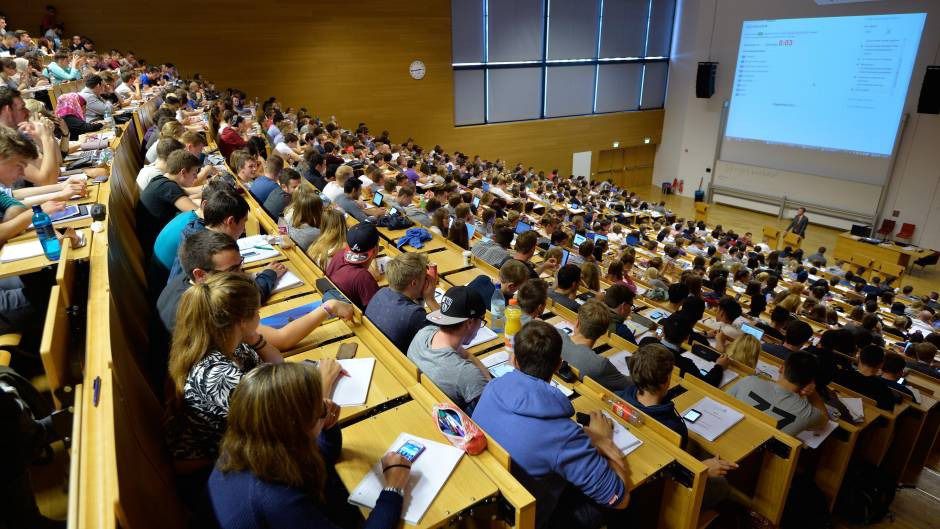
● Size: Large student body, often enrolling tens of thousands.
● Class Size: Large lecture halls for core courses; less personalized attention.
● Programs: Offers a broad range of academic and professional programs across many disciplines.
Private University:
● Size: Smaller, more intimate campuses.
● Class Size: Small class sizes and lower student-to-faculty ratios.
● Interaction: More opportunities for direct mentorship and personal attention from professors.
3. Governance & Mission
Public University:
● Governance: Subject to government oversight and state regulations.
● Mission: Focuses on serving the educational and research needs of state residents.
Private University:
● Governance: Operates independently under a Board of Trustees or Directors.
● Mission: Often guided by a founding vision, with specialized focus areas like business, liberal arts, or research.
4. Student Body
Public University:
● Geographic Mix: Higher percentage of local/in-state students.
● Diversity: Socioeconomically diverse due to lower cost barriers.
Private University:
● Geographic Mix: Attracts students nationally and internationally since tuition is the same for all.
● Diversity: High geographic diversity, but often less socioeconomically diverse due to high fees.
Top Career opportunities for German speakers
● Germany isn’t just open to global talent, it’s actively looking for it. Right now, Europe’s strongest economy needs skilled minds in Engineering, Computer Science, IT & Technology, Healthcare & Nursing, Finance & mathematics and the demand is real, not just a trend.
● One of the smartest ways to enter this system is through learning the language and studying in Germany. It’s not just about earning a degree, it’s about becoming part of a culture that values precision, discipline and real-world skills. German universities and institutions focus heavily on practical learning, helping you build strong industry connections while you study.
● What makes Germany stand out is how smoothly you can move from student life to professional life. With structured pathways and clear post-study opportunities, graduates get the time and support they need to find the right roles and confidently build long-term careers.
● If you’re tired of just memorising theory and want to actually build something real, Germany is the place to be. Here, universities don’t work in isolation, they partner closely with world-class research organisations to turn ideas into real-world solutions. Your learning doesn’t stay limited to books. You get hands-on exposure to live projects in cutting-edge areas like artificial intelligence, renewable energy and advanced engineering. Instead of watching innovation happen, you become part of it, working alongside researchers, startups and industry experts. By the time you graduate, you won’t just have a degree. You’ll have real project experience, strong professional connections and will know how the future is being built.
German Levels
Beginner (A1–A2)
● Understand and use simple everyday phrases.
● Introduce yourself, ask basic questions, and hold short conversations.
● Focus on listening, reading, writing, and speaking with confidence.
Intermediate (B1–B2)
● Express yourself on familiar topics and daily situations.
● Engage in more complex conversations and discussions.
● Write clear, structured texts and understand the main ideas in professional or academic contexts.
Advanced (C1–C2)
● Speak fluently and spontaneously with precision.
● Understand virtually everything heard or read, including complex materials.
● Summarize information from various sources, presenting it coherently.
Final Thoughts: Why German Is Worth It
We hope these points give you a clarity to begin your German language journey. German is more than just a language to learn, it’s a key to new opportunities, better careers and real-world connections. It helps you understand a rich culture, think in new ways and build confidence as you grow. Your journey can start today, one small step, one new word and one new opportunity at a time.
And the best part? It’ll be our journey together. You won’t be learning alone. With ITESKUL, your German learning journey becomes simple, structured, and motivating. We provide complete study support, including easy-to-understand PPTs, notes, and books, helping you learn faster and revise better. You’ll also receive step-by-step guidance for the Goethe German exams, ensuring you feel confident and fully prepared.
● But ITESKUL doesn’t stop at language learning. We also offer personalized study abroad counseling for students who dream of studying in Germany. From shortlisting the best public and private universities to selecting the right Bachelor’s, Master’s or Diploma programs, our team ensures a smooth, stress-free application process.
● Students receive full support in preparing essential documents such as Statement of Purpose (SOP), Letters of Recommendation (LORs), resumes and APS certification, along with guidance on German language requirements. We also assist with blocked account procedures, health insurance, visa documentation and even mock visa interview sessions.
● With a strong track record of admissions to top German universities like TU Dortmund, TU Freiburg, TU Chemnitz, TU Hamburg, RWTH Aachen, Hof University of Applied Sciences, RPTU Kaiserslautern, OVG Magdeburg, and Frankfurt School of Business, ITESKUL continues to empower students through pre-departure briefings, accommodation guidance, and ongoing support even after you arrive in Germany.
● With ITESKUL, you don’t just learn a language, you open doors to career opportunities and academic growth in Germany, with guidance and support every step of the way. Start your journey today, one new word, one new step and one new success at a time!